Automotive Digital Advertising in South Africa (2026)
A guide to the channels, metrics, and consumer trends shaping automotive advertising—and how to win attention, leads, and sales
Automotive Marketing Has Become a Game of Micro-Moments
Automotive is no longer marketed in a single moment. It is marketed across hundreds of micro-moments, including:
Late-night model comparisons on mobile
“Best SUV under R…” searches during the workday
Short-form video reviews on social platforms
Dealership credibility checks via online ratings
Final purchase decisions triggered by the right offer at the right time
By 2026, automotive brands and dealerships in South Africa are operating in a market where:
Digital access is mainstream
Competition is intensifying
Buyers are more informed and more price-conscious than ever
Digital advertising has become the most controllable lever to influence this journey—early, often, and measurably.
The Digital Reality in South Africa
South Africa enters 2026 with:
51.7 million internet users (nearly 80% penetration)
127 million mobile connections, reflecting multi-SIM and multi-device usage
The implication is clear:
Digital is the default consumer touchpoint
Mobile is the dominant access channel
At the same time, South African digital advertising spend continues to rise rapidly, with strong year-on-year growth and internet advertising now accounting for a significant share of total ad spend.
The Strategic Takeaway
If your automotive marketing budget is not engineered for a digital-first buyer journey, you will lose share—often quietly—until:
Lead volumes soften
Showroom traffic slows
Stock days increase
What “Automotive Digital Advertising” Means in 2026

Automotive digital advertising is the use of paid digital channels to influence and accelerate the vehicle purchase or service journey—from awareness to sale or booking.
In practical terms, it includes:
Reaching in-market shoppers researching models, pricing, and reviews
Building brand trust in credible automotive environments
Driving measurable actions, such as:
Calls
WhatsApp chats
Lead forms
Brochure downloads
Directions clicks
Bookings
Retargeting and nurturing prospects (where compliant) until conversion
Measuring performance with precision traditional media cannot match
In 2026, digital itself is no longer novel. What is new is:
Buyer behaviour shaped by short-form video
Local and hyperlocal intent
Privacy regulation
Rising competitive intensity
Why Automotive Digital Advertising Matters in South Africa in 2026
1) South Africa Is Mobile-First and Always-On
Key characteristics of the mobile environment include:
Mobile connections exceeding the total population
Nearly all connections classified as broadband
Fast median mobile download speeds supporting rich media and video
As a result:
The buyer journey is continuous
Research happens across apps, sessions, and moments—not in a straight line
2) Digital Is Where Advertising Growth and Measurement Live
Digital growth is driven by:
AI-powered optimisation
Personalisation and targeting
Social and community platforms
Retailers becoming media platforms
For automotive advertisers, budgets are increasingly evaluated on:
Cost per lead
Lead quality
Appointment and test-drive rates
Cost per sale
3) Social and Video Are Now Research Channels
Social platforms are no longer just awareness tools. Buyers now consume:
Feature breakdowns
Pricing explanations
Reviews and comparisons
Virtual walkarounds and test drives
before stepping into a dealership.
Audience scale across major platforms is large and meaningful, reinforcing social video as a core research and consideration channel.
4) Trust Has Become a Primary Conversion Lever
Consumers increasingly expect:
Third-party credibility
Transparent reviews
Proof of reputation
If your dealership or brand is not visible in trusted environments—or does not actively reinforce credibility—price becomes the only differentiator, eroding margins.
5) Affordability and Competition Are Reshaping Demand
The automotive market is being shaped by:
Affordability-driven consumer behaviour
Increased competition from lower-cost imports
This changes the advertising playbook:
Offers and total cost of ownership matter more
Finance and trade-in messaging becomes central
Precision targeting outperforms broad reach
6) Connectivity Continues to Improve
Improving device access and faster networks mean:
Higher-quality video performs better
Rich formats are more viable
Mobile-first experiences become non-negotiable
7) Privacy and Compliance Are Non-Optional
South Africa’s privacy framework directly impacts:
Email marketing
SMS and automated messaging
Lead generation and remarketing
At the same time, the broader ecosystem is moving away from fragile third-party tracking.
Strategic response for automotive advertisers:
Prioritise high-intent, contextual environments
Invest in first-party data and measurement
The Key Channels Shaping Automotive Advertising in 2026
High-performing automotive strategies balance:
Demand capture (buyers shopping now)
Demand creation (staying top-of-mind until they are ready)
1) Search (Paid Search and SEO): The Moment of Intent
Search captures explicit intent, including:
Make and model queries
“Best car for…” research
Dealer and location searches
Finance and trade-in queries
Where search wins:
Converting ready-to-buy shoppers
Promoting stock-specific offers
Driving calls and leads
What to watch:
Rising cost-per-clicks
Lead quality vs volume
Mobile landing-page friction
2) Social and Short-Form Video: Discovery at Scale
Where it wins:
Launching models and offers
Showing proof (walkarounds, ownership stories, service credibility)
Building consideration among younger buyers
What to watch:
Creative fatigue
Optimising for cheap clicks instead of qualified leads
3) Premium Publisher and Contextual Display
Automotive is a trust category. Context matters.
Where it wins:
Staying visible during long research cycles
Influencing mid-funnel decisions
Reducing wasted spend on low-relevance inventory
4) Marketplaces and Listings Environments
Where they win:
High-intent inventory discovery
Competitive positioning by price and availability
What to watch:
Margin pressure
Limited differentiation when everyone is listed
5) CRM, Remarketing, and Messaging (When Compliant)
Where it wins:
Lead follow-up
Service and accessory promotions
Retention and trade-in cycles
What to watch:
Consent management
Messaging frequency and relevance
The Metrics That Matter: A Practical KPI Stack
Digital dominates automotive marketing because performance is visible and budgets can move quickly.
Top-of-Funnel (Awareness)
Reach and frequency
Viewability
Video completion or view-through rates
Branded search uplift
Mid-Funnel (Consideration)
Click-through rate
Engaged sessions
Landing-page views and time on site
Vehicle detail page views
Finance tools and brochure downloads
Bottom-of-Funnel (Conversion)
Leads (forms, calls, messaging)
Cost per lead and qualified-lead rate
Appointment and test-drive rate
Lead-to-sale conversion
Cost per sale or return on ad spend
The Most Overlooked Metric: Lead Quality
The real questions in 2026 are:
How many leads became appointments?
How many appointments became deliveries?
That is where serious advertisers outperform.
Consumer Trends Shaping Automotive Advertising in 2026
Trend 1: Buyers Arrive Informed
Generic creative underperforms. Buyers expect relevance and speed.
Trend 2: Trust Signals Accelerate Conversion
Effective advertising reinforces:
Reputation
Warranty and aftersales support
Finance transparency
Dealer credibility
Trend 3: Local Intent Is Decisive
South Africa is many local markets, not one national one. Hyperlocal visibility often determines success.
Trend 4: Affordability Drives Messaging
Budget pressure requires clear, honest value communication.
Trend 5: EV and New Powertrains Expand the Content Journey
Education around:
Charging
Range
Ownership costs
becomes part of the advertising funnel.
Trend 6: Better Connectivity Raises the Creative Ceiling
Higher-quality video and richer formats are increasingly effective.
The 2026 Automotive Digital Playbook
A strategy that scales under scrutiny follows four principles:
1) Always-On Presence
Automotive demand does not pause. Going dark hands advantage to competitors.
2) Context Over Waste
Premium, relevant environments outperform broad, low-quality reach.
3) Engineered Conversion Paths
Every click should land on:
Mobile-fast pages
Clear offers
Simple forms
Click-to-call and messaging
Immediate location and hours visibility
4) Reporting as a Budget Weapon
Optimise weekly, not monthly, based on:
Creative quality
Placement performance
Geographic and category conversion
Why AutoAds Is Built for 2026 Automotive Advertising

Most advertisers do not suffer from too few channels—they suffer from fragmentation.
AutoAds is designed to unify:
Premium automotive audiences
Campaign execution
Transparent reporting
Key Advantages
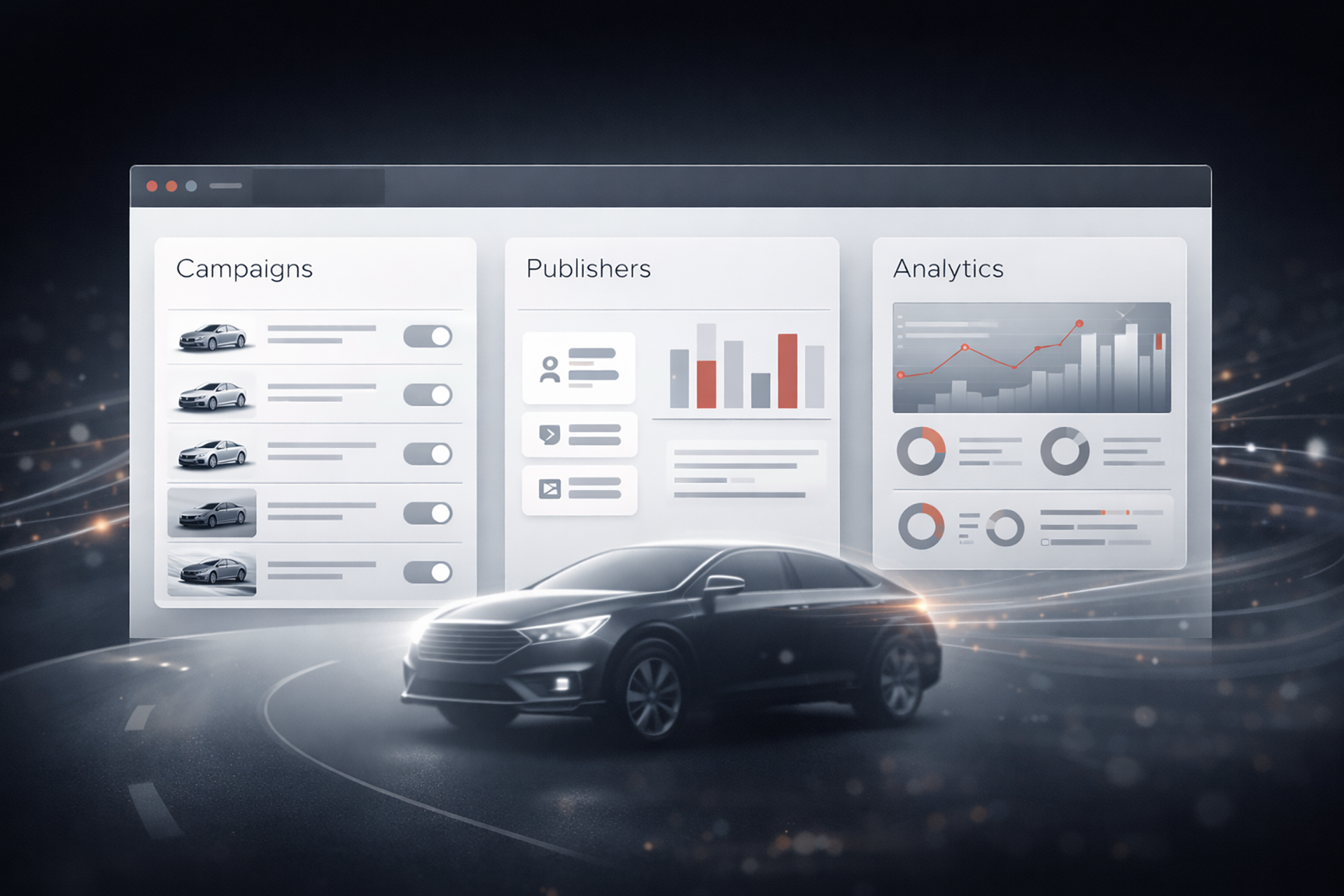
Centralised campaign and analytics dashboard
Access to a curated automotive publisher network
Performance-friendly, transparent pricing
Wallet-based packages with bonus value
Clear impression economics for fast planning
Who Should Be Using AutoAds in 2026
AutoAds is well-suited for:
Dealer groups running always-on visibility
OEMs and importers launching models
Tyre, fitment, and service brands
Aftermarket parts and accessories
Workshop equipment suppliers
Finance, warranty, and insurance providers
The Bottom Line

2026 is the year to buy relevance, not just reach.
In South Africa, automotive advertisers who win will be those who:
Show up early in the journey
Build trust in credible contexts
Measure what matters—qualified leads and conversions
AutoAds is built to support exactly that approach, with focus, transparency, and measurable impact.